Is the Garsen Max Putter Grip Worth the Investment?
Putter grips rarely get much attention. Golfers will agonise over shaft flex, iron loft, and wedge bounce angles — then shrug and leave whatever grip came on their putter. But if your stroke is leaking shots on the green, the grip is one of the few pieces of equipment that can genuinely make a mechanical difference. The Garsen Max is one of the most talked-about putter grips on the market for exactly that reason. It doesn’t just promise better feel. It claims to change the way your body moves through the stroke.
Whether that’s worth $34.99 depends entirely on who you are as a putter. Here’s everything you need to know before buying.
What Is the Garsen Max Putter Grip?
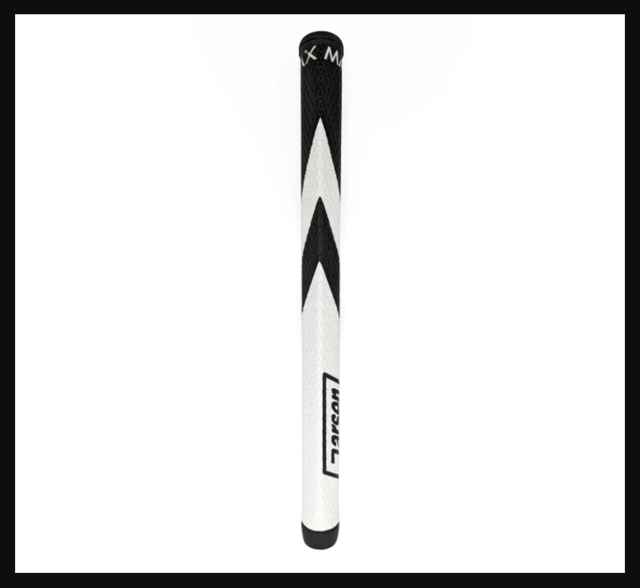
The Garsen Max is a patented putter grip built on a simple but clever idea: take a square grip and rotate it 45 degrees. That rotation means the front of the grip becomes an angled V-shaped ridge rather than a flat surface.
When you place your thumbs either side of that ridge, your palms naturally face each other, your wrists sit in a neutral position, and your elbows rotate slightly inward toward the body.
The result is that your shoulders are set back into a relaxed position, arm tension is relieved, and wrist action is inhibited — taking the hands out of the stroke so the shoulders do the work instead. It’s not a gimmick concept. Tour professionals including Henrik Stenson and Tony Finau have used Garsen grips, and Stenson famously used the G-Pro Max during his record-setting performance at the 2016 Open Championship.
Specifications at a Glance
| Feature | Garsen Max |
|---|---|
| Construction | Patented square grip, 45° rotation |
| Diameter | 1.5 inches (mid-size) |
| Weight | 55 grams |
| Length | 10.25 inches (also available in 15″) |
| Core Size | 0.600 |
| Material | High-tech PU (polyurethane) |
| Feel | Semi-tacky |
| Profile | Semi-tapered |
| Price | $34.99 |
| Colors | Black/White, Black/Blue, Black/Red |
The Max Tour version — same shape, smoother semi-gloss texture — is also available at the same price point, and a 15-inch extended version exists for golfers who use longer putters or an anchored-style setup.
The Core Technology: What the V-Spine Actually Does
The V-shaped spine running down the front of the grip is the entire design concept — everything else flows from it.
According to Garsen’s official product page, the inverted V-shape places the wrists in a neutral position with the palms facing each other, relieving arm and shoulder tension by rotating the elbows toward the body and the shoulders back. From that position, golfers engage their shoulders during the stroke rather than their wrists.
This matters because wrist breakdown during the putting stroke is one of the most common causes of missed putts, particularly under pressure. When your wrists get active through impact, the putter face opens or closes inconsistently. The result is putts that start on line but miss — or worse, putts where you simply can’t predict which way the face is pointing at contact.
The Garsen Max addresses this structurally. Because the grip forces a specific hand position, it becomes mechanically difficult to let the wrists take over. As GolfWRX’s hands-on review noted, wrist breakdown becomes virtually impossible with the Garsen grip installed, as does any significant hand manipulation through the stroke.
Think of it less as a grip and more as a corrective positioning device that you happen to also putt with.
How It Feels to Putt With
The first time you grip the Garsen Max, it will feel unusual. That’s by design. As one Golf Monthly forum member observed, if a grip like this doesn’t feel weird and awkward for a while, it probably isn’t doing much good — the awkwardness is the correction happening, not a flaw in the product.
After the initial adjustment period — which most golfers report taking a few sessions on the practice green — the grip begins to feel natural. From Driving Range Heroes’ review, testers found a very natural feel at first grip, with the shape making it easy to index the putter consistently — going a long way toward ensuring the same grip is repeated on every putt.
The material itself is a high-tech polyurethane with a semi-tacky surface and medium firmness. It has minimal tack compared to standard grips, which means you don’t need to grip the putter tightly to maintain contact — that’s actually intentional, because a lighter grip pressure complements the shoulder-driven stroke the grip is designed to promote.
The overall feel at impact is soft with good cushioning. It’s not a feedback-heavy grip that gives you a sharp click on putts — it’s slightly more muted, which suits golfers who want a calm, smooth putting sensation rather than a crisp, tactile one.
What Golfers Are Saying
Real-world feedback on the Garsen Max is consistently positive, particularly from mid-handicappers who struggled with stroke consistency.
In a MyGolfSpy community review involving testers with handicap indexes ranging from 4.8 to 8.0, one tester reported gaining 3.8 strokes gained putting over five rounds. Three of the four testers became loyal users, with all of them noting the grip promoted a more repeatable stroke that translated into putts rolling more consistently on the intended line.
From Plugged In Golf’s testing, a conventional grip player found the Max to be the standout option in Garsen’s lineup, while a prayer-style grip player found it equally comfortable. The claw grip, however, proved tricky to position around the V-spine — worth knowing if that’s your preferred putting style.
On The Hackers Paradise’s extended community thread, golfers using the Max reported recurring themes:
- More consistent grip indexing — hands land in the same position every single time
- Quieter wrist movement throughout the stroke
- Improved distance control, particularly on mid-range putts
- Higher confidence standing over the ball, especially on short putts under pressure
Criticism is rarer but honest. Some golfers find the grip appears to close the putter face at address until they adjust their alignment habits. Others report that longer lag putts feel foreign initially because the shoulder-only motion takes time to calibrate for distance. One GolfWRX forum thread noted the grip felt “sooo closed” on first use — a comment that reflects the adjustment period almost every new user goes through, not a permanent problem.
Garsen Max vs. SuperStroke: How They Compare
If you’re considering the Garsen Max, you’ve probably also looked at SuperStroke. They’re the two most common answers to the same problem — too much wrist action — but they solve it differently.
| Feature | Garsen Max | SuperStroke Slim 2.0 |
|---|---|---|
| Mechanism | V-spine forces neutral hand position | Oversized diameter reduces grip pressure |
| Diameter | 1.5 inches | Similar mid-size |
| Weight | 55 grams | ~50 grams |
| Hand Position | Structured and indexed | Freeform on large diameter |
| Grip Style Compatibility | Best for conventional, prayer | Works with most styles including claw |
| Price | $34.99 | $14.99–$22.99 |
| Tour Use | Stenson, Finau | Widely used across all tours |
The Garsen Max is sized similarly to the SuperStroke Slim 2.0, but the distinct difference is in the mechanism — not the diameter. SuperStroke reduces wrist action passively, through size alone. The Garsen Max does it actively, through a specific hand positioning structure. If you’ve tried a SuperStroke and still found your wrists getting involved, the Garsen Max is the logical next step.
Who Should Buy the Garsen Max?
The Garsen Max is a strong buy if you:
- Struggle with lead-wrist breakdown during the stroke
- Miss short putts because of inconsistent face angle at impact
- Have trouble gripping the putter the same way each time
- Experience the yips or any form of stroke anxiety under pressure
- Prefer a conventional or prayer-style grip and are open to a short adjustment period
- Want a biomechanical fix rather than just a feel change
The Garsen Max may not suit you if you:
- Rely heavily on a claw grip — the V-spine can be awkward to position around
- Are a pure feel putter who uses wrist hinge for distance control on longer putts
- Have a stroke that already works and don’t want to rebuild habits
- Prefer a thinner, more traditional pistol grip feel
As GolfWRX’s review concluded: if you have wrist breakdown, the yips, or are simply unhappy with your current putting grip, Garsen’s grips are worth a try. That holds up well as a straightforward buying test.
Is $34.99 Worth It?
At face value, $34.99 is reasonable for a premium putter grip. SuperStroke grips run $15–$23, standard pistol grips can be found for $10–$15, and full-custom putter grips can reach $60 and above. The Garsen Max sits comfortably in the mid-to-premium range.
The value question really comes down to whether the design solves a real problem you have.
If you’re dropping two to three putts per round to wrist breakdown, inconsistent face angle, or general short-putting nerves, the Garsen Max is one of the most targeted solutions available at this price. You’re not buying a better material or a heavier weight — you’re buying a biomechanical correction that has been validated by competitive tour players and independent testers.
If your putting stroke is structurally sound and you’re just looking for a new feel, you might get equal value from a quality mid-size grip at half the price. But if the problem the Garsen Max addresses matches a problem you actually have on the greens, $34.99 is genuinely cheap for the potential improvement.
The 55-gram weight is also worth noting — it’s light enough that you won’t need to rebalance your putter’s swing weight after installation, avoiding an additional cost that heavier counterbalanced grips can create.
Frequently Asked Questions
What grip styles work with the Garsen Max? The Max works best with a conventional grip and a prayer or reverse-overlap style. A claw grip can be used but some testers find the V-spine awkward to position around. A pencil grip is not well suited to this design.
Does the Garsen Max work for left-handed golfers? Yes — the symmetrical V-spine design works the same way for both right and left-handed players. The grip is effectively ambidextrous by design.
Is the Garsen Max legal for tournament play? Yes. The Garsen Max conforms to USGA and R&A equipment rules and can be used in all competitive rounds.
How long does it take to adjust to the Garsen Max? Most golfers report feeling comfortable after two to four practice sessions. The initial strangeness — particularly the putter appearing to sit closed at address — typically resolves once you trust the grip position and stop making compensations.
What’s the difference between the Max and the Max Tour? The Max Tour is the same shape with a smoother, semi-gloss surface texture instead of the original’s softer, cushioned material. Both are priced at $34.99. The choice comes down to personal preference for texture — the Max Tour feels slightly firmer and more responsive at impact.
Final Verdict
The Garsen Max is a thoughtfully engineered putter grip built on a concept that is simple, patented, and demonstrably effective for a specific type of golfer. If wrist breakdown, inconsistency at address, or short-putt anxiety is costing you shots, this grip targets those exact problems at the mechanical level — not through feel cues or tip sheets, but through the way it physically positions your hands and arms.
At $34.99, it’s a legitimate investment rather than a novelty purchase. The adjustment period is real but short. And the consensus from tour professionals, community testers, and independent reviewers is consistent: for the golfer it’s designed to help, it works.
The more honest question isn’t whether the Garsen Max is worth the money. It’s whether your putting stroke is the type it’s designed to fix. If the answer is yes, buy it without hesitation.
Discover the meticulous and expert-driven process behind our product reviews at Sportic Media. Our comprehensive guide, led by industry veterans, ensures you get the most reliable and detailed insights into golf equipment. Dive into our methodical approach by visiting How We Test Products at Sportic Media: A Comprehensive Guide
.