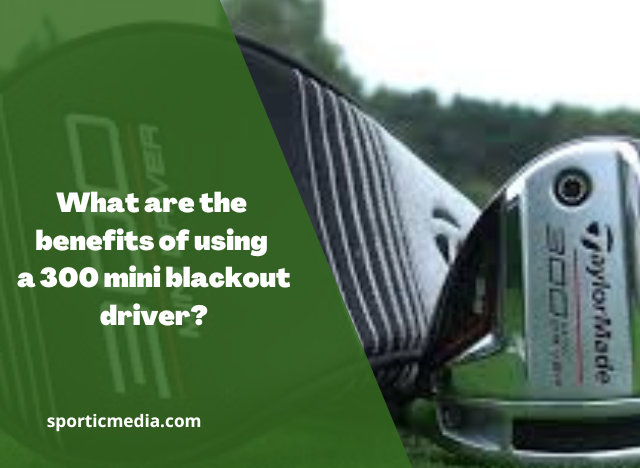
The TaylorMade 300 Mini Blackout is one of the more curious clubs in the bag: smaller than a driver, shorter than most drivers, and bigger than a fairway wood. Golfers keep asking whether that in-between size is a real advantage or just a nostalgic look.
Here is a straight answer, using TaylorMade’s specs and independent testing, and flagging where the evidence is thin.
Table of Contents
Quick Answer: What Are the Benefits?
The 300 Mini Blackout is the standard 300 Mini with a darker colourway. Its real benefits come from the mini-driver design: a shorter shaft, a 307cc head, a low centre of gravity and the ability to hit off both the tee and the turf. It is a tool for golfers who want more control than a full driver and more distance than a 3-wood, not a driver replacement for everyone.
| Benefit | In one line | How well supported |
|---|---|---|
| Control off the tee | Shorter shaft, smaller head | Plausible, but independent testing was mixed |
| Works off the deck | Launches higher than a typical driver would | Supported by testers, for decent lies |
| Bridges driver and 3-wood | More total distance than a 3-wood | Supported by independent testing |
| Forgiveness for its size | Twist Face and a large head | Mostly TaylorMade’s claim |
| Loft adjustability | Plus or minus 2 degrees | Confirmed by reviewers |
| Blackout styling | Darker face and sole | Looks only, no performance change |
What Is the 300 Mini Blackout?
The Blackout is the original 300 Mini in a different finish. TaylorMade calls it an exclusive small batch offering that pairs the original 300 Mini’s performance with a more aggressive face and sole colourway. The original launched in July 2021 as a nod to TaylorMade’s 300 Series drivers from 2000.
| Spec | 300 Mini Blackout |
|---|---|
| Head volume | 307cc |
| Lofts | 11.5° and 13.5° |
| Length | 43.75″ |
| Lie angle | 56°–60° |
| Swing weight | D3 |
| Construction | Carbon crown, thin titanium face, 54g steel V-sole plate |
| Face tech | Twist Face |
| Stock shaft | Mitsubishi MiDr Proto |
| List price | $399.99 |
Construction details come from Golf.com’s launch coverage. Because the Blackout was a small batch, supply is limited and I couldn’t confirm its exact release date or current stock, so check availability before planning around it.
What the Blackout finish adds. TaylorMade describes the Blackout as an alternative face and sole colourway with a sleek look for the tee box or fairway. There is no claim that it performs differently from the standard 300 Mini.
If you like the darker look and feel more confident over the ball, that has value. If you’re buying for performance, the standard version is the same club.
The Five Benefits, and How Well Each Holds Up
Benefit 1: Better Control Off the Tee, Maybe
The 300 Mini’s shaft is 43.75″, noticeably shorter than a typical driver, and shorter shafts tend to produce fewer off-centre strikes. That is the logic behind the control argument.
The test evidence is more cautious. In its launch-era review, Golf Monthly found the 300 Mini didn’t seem to offer more control off the tee than a conventional 460cc driver, because the shorter length was offset by a less forgiving head. Dispersion was similar to the SIM2 driver it was compared against.
So treat control as a possible benefit for golfers who swing a long driver poorly, not a guaranteed one. Test it against your own driver.
Benefit 2: You Can Hit It Off the Deck
This is the mini driver’s clearest advantage over a full driver. TaylorMade positions the 300 Mini as playable off the fairway, with mass spread across the sole to help launch the ball higher off turf.
Reviewers broadly agreed. Golf Monthly found it surprisingly comfortable off the deck for a competent player, and said the larger head was confidence-inspiring. Golfalot hit it against TaylorMade’s earlier Original One Mini and found the 300 Mini flew a touch higher off the deck, with slightly lower spin.
The caveat is lie quality. Off a tight or poor lie, any club this size is harder to hit than a lofted fairway wood, so test it off turf, not just a tee.
Benefit 3: It Fills the Gap Between Driver and 3-Wood
Golfalot noted that an average driver sits around 10.5° and a 3-wood around 15°, so the 13.5° 300 Mini lands neatly between the two.
Golf Monthly’s numbers back that up. They found little carry difference between the 300 Mini and a 3-wood, but a significant increase in total distance over a 15° 3-wood, with a lower flight. Against the SIM2 driver, though, the 300 Mini gave up both carry and total yardage.
In practice, that makes it an option for holes where driver is too much and 3-wood is too little. One golfer in a MyGolfSpy comment thread described using theirs on short par 4s, saying their driver goes about 260 while the mini goes about 240 with a face that is hard to miss. That is one person’s account, not a test.
Benefit 4: Forgiveness for a Compact Head
At 307cc, the head is bigger than a fairway wood (around 180cc, according to one review) but well under the 460cc limit. TaylorMade says the construction delivers more forgiveness than a standard fairway wood, and the Twist Face design is meant to correct the effect of off-centre hits.
Take this one as a manufacturer claim. Independent testers described the head as confidence-inspiring, but also less forgiving than a full 460cc driver, which fits the size.
Benefit 5: Adjustable Loft
The loft sleeve moves loft up or down by 2 degrees, according to Golfalot. That makes the 11.5° head adjustable from about 9.5° to 13.5°, and the 13.5° head from about 11.5° to 15.5°. It lets you tune launch and face angle, or turn the mini into a tee-only club or a more fairway-friendly one.
Who Benefits Most, and Who Should Skip It
| Golfer type | Good fit? | Why |
|---|---|---|
| Misses driver into trouble often | Yes | A shorter, lower-launching option for tight holes |
| Has an unreliable 3-wood used mostly off the tee | Yes | Larger head, easier to hit off a tee |
| Wants a club for long par 5s from good lies | Yes | Usable off the deck |
| Hits driver well and wants maximum distance | Probably not | Independent testing showed less distance than a driver |
| Needs maximum forgiveness | Probably not | Less forgiving than a 460cc head |
| Struggles to hit fairway woods off the turf | Test first | Lie quality matters a lot |
How to Decide Before You Buy
- Decide the job. Is it replacing a 3-wood, backing up your driver, or both?
- Test it off the tee and the turf on a launch monitor, since the deck is the point.
- Compare carry, total distance and dispersion against your driver and 3-wood, not just your best shot.
- Check the shaft and loft. The stock shaft weighs about 65g, so ask a fitter whether it suits your swing.
- Check availability and price. TaylorMade lists it at $399.99, but small-batch stock and resale prices vary widely.
Frequently Asked Questions
What is the 300 Mini Blackout driver?
It is TaylorMade’s 300 Mini Driver in a small-batch darker colourway, with a 307cc head, 43.75″ length and 11.5° or 13.5° loft.
Is the Blackout different from the regular 300 Mini?
Only in finish. TaylorMade describes it as the same performance with a more aggressive face and sole colourway.
Is a mini driver easier to hit than a driver?
Not necessarily. The shorter shaft helps some golfers, but Golf Monthly found the less forgiving head offset any control gain.
Can you hit the 300 Mini off the fairway?
Yes, from decent lies. Reviewers found it comfortable off the deck, though a lofted fairway wood is usually easier.
How far does the 300 Mini go?
In Golf Monthly’s test it matched a 3-wood for carry, gave more total distance, and fell short of the SIM2 driver. Your own numbers will differ.
Can I adjust the loft?
Yes, by plus or minus 2 degrees with the loft sleeve.
Is it still available?
It was a small-batch release and I couldn’t confirm current stock. Check retailers and resale listings.
Final Verdict
The 300 Mini Blackout is a specialist club with real strengths: it hits off the tee and the turf, fits neatly between driver and 3-wood, and lets you tune loft. It is not a cure for a bad driver, and independent testing shows you give up distance against a full driver.
If you have a clear job for it, such as tight tee shots or a better option than an unreliable 3-wood, it can earn its spot. If not, a standard 300 Mini or another mini driver gives you the same design. Test it against your current clubs and let the numbers decide.
Discover the meticulous and expert-driven process behind our product reviews at Sportic Media. Our comprehensive guide, led by industry veterans, ensures you get the most reliable and detailed insights into golf equipment. Dive into our methodical approach by visiting How We Test Products at Sportic Media: A Comprehensive Guide
.