
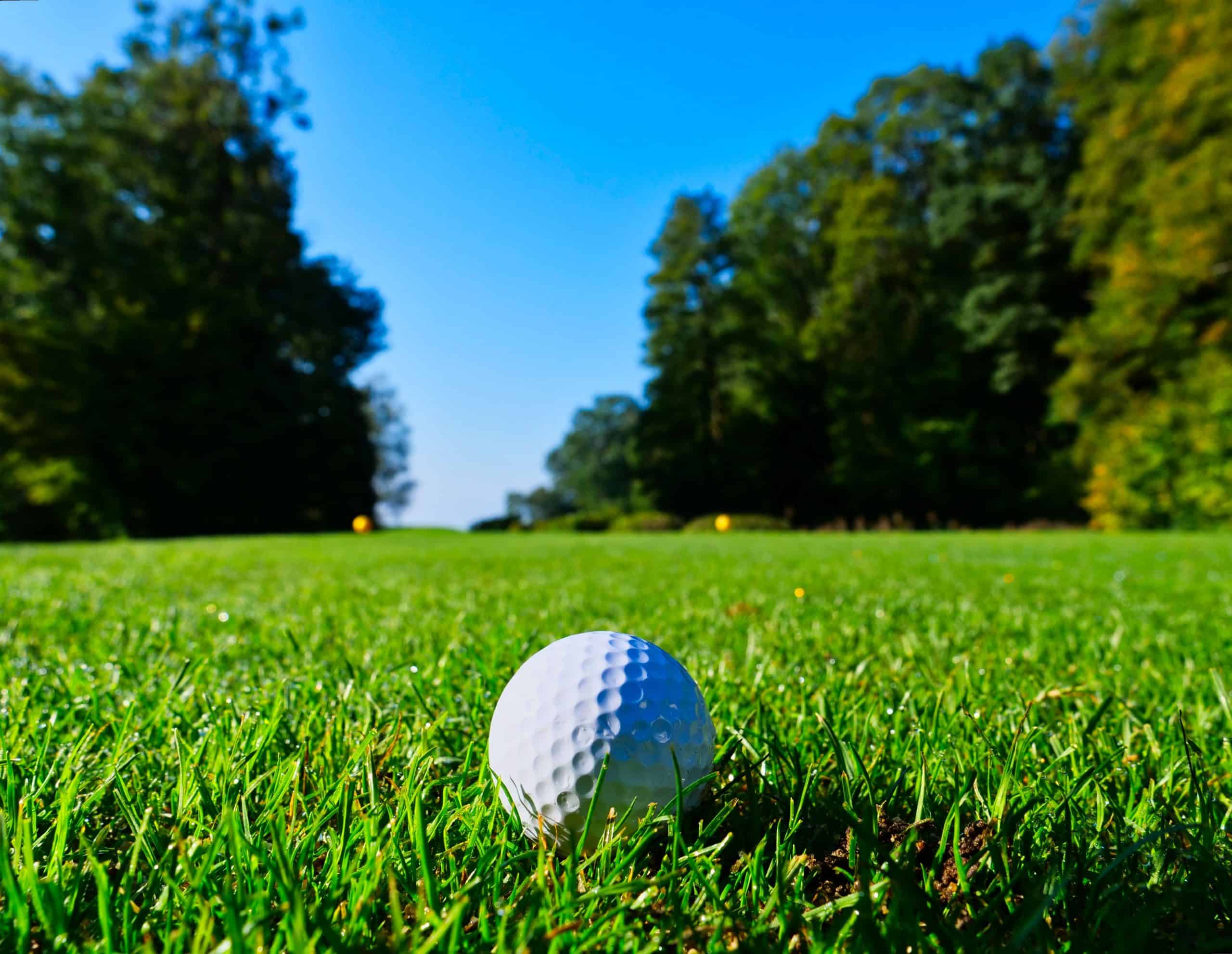
Golf is often described as a game played in nature, but traditional golf balls can create an environmental problem that is easy to overlook.
Every year, golfers hit balls into water hazards, forests, rough areas, and other places where they are never recovered. Lost balls can remain in the environment for years, while balls deliberately hit into oceans, lakes, or other sensitive areas can introduce synthetic materials into ecosystems.
That has led to growing interest in biodegradable golf balls and other environmentally friendly alternatives.
But can biodegradable golf balls really help golfers “save the world”?
The answer is more nuanced than the marketing suggests. Biodegradable golf balls can reduce the persistence of lost golf balls in certain environments, particularly when they are specifically designed to break down under natural conditions. However, they are not a complete solution to golf’s environmental footprint.
Understanding how these balls work, where they are appropriate, and what “biodegradable” actually means is essential before deciding whether they are a better choice.
Table of Contents
What Are Biodegradable Golf Balls?
Biodegradable golf balls are golf balls made with materials or components intended to break down through biological or environmental processes rather than remaining intact indefinitely like conventional synthetic golf balls.
Traditional golf balls typically contain a combination of synthetic rubber, polymer materials and thermoplastic or urethane components. Their durability is a major reason they perform well, but it also means a lost ball can persist in the environment.
Biodegradable alternatives attempt to solve part of this problem by using materials that can degrade under particular environmental conditions.
Are Biodegradable Golf Balls Actually Made to Disappear?
Yes, but “biodegradable” does not mean that a golf ball instantly dissolves after it enters the environment.
Biodegradation depends on factors such as:
- Temperature
- Moisture
- Microbial activity
- Oxygen availability
- Soil conditions
- Water conditions
- Material composition
- Time
A product marketed as biodegradable should therefore be evaluated according to where and how it has been tested, rather than simply assuming it will disappear quickly anywhere.
Biodegradable vs Eco-Friendly Golf Balls
These terms are not necessarily interchangeable.
| Term | What It Generally Means |
|---|---|
| Biodegradable | Capable of being broken down by biological processes |
| Compostable | Designed to break down under specified composting conditions |
| Recycled | Contains material recovered from previously used products |
| Recyclable | Can potentially be processed into another product |
| Eco-friendly | Broad marketing term with no single universal technical definition |
| Sustainable | Broad term relating to environmental impacts and resource use |
A golf ball can be recycled without being biodegradable, while another could be biodegradable without necessarily having a low overall environmental footprint.
Why Are Lost Golf Balls an Environmental Problem?
Golf balls are designed to survive repeated high-speed impacts.
That durability becomes a disadvantage when balls leave the course.
Golfers lose balls in:
- Lakes
- Rivers
- Coastal waters
- Forests
- Wetlands
- Dense rough
- Unmaintained areas
- Practice areas
A conventional golf ball does not simply become harmless because it is no longer visible.
Golf Balls in Water
Water hazards are particularly important because golfers may lose hundreds or thousands of balls in heavily played areas over time.
Traditional golf balls contain synthetic materials that are not designed to rapidly biodegrade.
As a result, simply leaving them underwater is not an environmentally neutral disposal method.
Microplastic Concerns
The environmental concern goes beyond the physical golf ball.
Synthetic polymer products can contribute to the broader problem of persistent plastic pollution as they weather and degrade.
However, it is important not to overstate the evidence.
The environmental impact of golf balls varies according to their materials, location, quantity and surrounding ecosystem. Claims that every lost conventional golf ball immediately creates a major microplastic hazard are not supported simply by the fact that the ball is plastic-based.
The strongest argument for biodegradable golf balls is therefore reducing the persistence of balls that are intentionally or predictably lost in sensitive environments.
How Do Biodegradable Golf Balls Work?
There is no single technology used by every biodegradable golf ball.
Different products use different approaches.
Biodegradable Outer Materials
Some environmentally focused golf balls use biodegradable or more readily degradable materials in the cover.
The objective is to make the ball more susceptible to environmental breakdown after it is lost.
Biodegradable Cores
Other designs focus on the core.
The core of a conventional golf ball is typically made from synthetic rubber compounds. Environmentally focused alternatives may use different formulations intended to degrade more readily.
Water-Soluble Golf Balls
Water-soluble golf balls are a related but different category.
These products are specifically designed for situations where the ball will be intentionally hit into water.
They may be made from materials that break down much faster in water than conventional golf balls.
That makes them particularly relevant to:
- Golf resorts
- Boat-based golf
- Coastal golf activities
- Fishing or marine activities
- Water-driving events
- Practice sessions over water
However, water-soluble does not automatically mean biodegradable in every environment.
How Long Do Biodegradable Golf Balls Take to Break Down?
There is no universal answer.
Different products make different claims, and degradation time depends heavily on environmental conditions.
A manufacturer might claim that a product breaks down within months, while another may specify a different timeframe.
The key question is:
Under what conditions was the degradation measured?
What Affects Degradation Time?
| Factor | Effect on Degradation |
|---|---|
| Warm temperature | Can accelerate biological activity |
| Moisture | Often important for biodegradation |
| Microorganisms | Can contribute to biological breakdown |
| Oxygen | Important for many degradation processes |
| Sunlight | Can accelerate some forms of material degradation |
| Cold water | May slow degradation |
| Dry conditions | Can slow biological activity |
| Material formulation | Major influence on degradation rate |
Therefore, a statement such as “biodegrades in six months” should not automatically be interpreted as “will disappear within six months anywhere on Earth.”
Are Biodegradable Golf Balls Good for Golf?
This is where environmental goals meet performance.
A golf ball needs to satisfy several competing requirements.
It needs to:
- Travel efficiently
- Produce predictable spin
- Maintain structural integrity
- Survive impact with the clubface
- Survive impact with the ground
- Maintain consistent flight
- Feel appropriate around the greens
Making a ball more environmentally degradable can introduce engineering challenges.
Distance
Some biodegradable golf balls can deliver respectable distance, particularly when they are designed for recreational rather than elite competition.
However, golfers should not assume that every biodegradable ball will perform like a premium multilayer tour ball.
Spin
Spin performance can be especially important for skilled golfers.
A conventional urethane-covered ball may offer substantially different greenside spin characteristics from an environmentally focused recreational ball.
Durability
A golf ball designed to degrade after being lost must still remain durable enough during normal play.
That creates an interesting engineering challenge:
It needs to be durable when you’re using it, but degradable when you are finished with it.
Biodegradable Golf Balls vs Traditional Golf Balls
| Feature | Biodegradable Golf Ball | Traditional Golf Ball |
|---|---|---|
| Environmental persistence | Potentially lower | Generally higher |
| Long-term durability | Varies | Usually very high |
| Tour-level performance | Product dependent | Widely available |
| Distance | Product dependent | Broad range |
| Greenside spin | Product dependent | Excellent options available |
| Intended use | Recreational/environmental applications | General golf |
| Water use | Some products specifically designed for water | Generally unsuitable for deliberate environmental disposal |
| Price | Varies | Very broad range |
The important word is product dependent.
“Biodegradable” tells you something about the intended environmental behavior, but it does not tell you everything about the ball’s aerodynamic or playing characteristics.
Where Do Biodegradable Golf Balls Make the Most Sense?
The environmental benefit is greatest when a ball is likely to be permanently lost.
Water-Based Golf Activities
This is arguably one of the most logical applications.
If golfers deliberately hit hundreds of balls into a lake or ocean, recovering every ball may be impractical.
A purpose-designed biodegradable or water-soluble ball can reduce the amount of persistent material entering that environment.
Golf Events Near Sensitive Areas
Courses located near:
- Wetlands
- Coastal ecosystems
- Protected habitats
- Lakes
- Rivers
may have additional reasons to consider environmentally appropriate golf-ball alternatives for certain activities.
Golf Practice
Biodegradable balls can also make sense for certain practice environments where balls are intentionally hit into difficult-to-recover areas.
Can You Use Biodegradable Golf Balls in a Tournament?
This depends on whether the particular ball conforms to the Rules of Golf and any applicable competition requirements.
A ball being environmentally friendly does not automatically make it legal for competition.
For competitive play, golfers need to consider requirements concerning:
- Ball size
- Ball weight
- Symmetry
- Initial velocity
- Overall distance
- Conformance status
The R&A and USGA maintain the official conforming-ball specifications and equipment rules.
A recreational biodegradable golf ball may therefore be perfectly appropriate for a casual environmental activity while not being suitable for tournament play.
Why Conformance Matters
If you are playing a serious competition, don’t choose a ball solely because its packaging says “biodegradable.”
Check whether the specific model is permitted under the competition’s Rules.
Do Biodegradable Golf Balls Really Help the Environment?
Yes, potentially—but the scale of the benefit needs to be kept in perspective.
Switching golf balls can address one relatively specific environmental issue: persistent golf-ball waste.
It does not solve golf’s larger environmental footprint.
Golf courses also consume:
- Water
- Fertilizers
- Fuel
- Electricity
- Pesticides and other turf-management products
Golf facilities can also generate substantial waste from food service, maintenance, packaging and landscaping.
Therefore, biodegradable balls should be viewed as one environmental improvement rather than a complete sustainability strategy.
The Biggest Environmental Benefit May Be Changing Where Golf Balls Are Used
The most interesting point is not necessarily that every golfer should replace every golf ball.
Instead, golfers should consider where a ball is being used.
If you’re playing a normal round on a well-maintained course and can retrieve lost balls, a high-quality conventional ball can potentially be reused multiple times.
If you’re deliberately hitting hundreds of balls into an inaccessible lake, the environmental equation is very different.
Reuse Comes Before Replacement
One of the simplest environmental strategies is to use a golf ball for as long as possible.
A ball that is found and reused several times may create less waste than repeatedly purchasing disposable alternatives.
A practical hierarchy is:
- Avoid unnecessary ball loss.
- Recover lost balls where appropriate.
- Reuse playable balls.
- Recycle where suitable programs exist.
- Use biodegradable alternatives where permanent loss is likely.
This approach addresses the problem more comprehensively than simply buying a new “eco” product.
Are Used Golf Balls Better Than Biodegradable Golf Balls?
Not necessarily—but they can be an environmentally sensible choice.
A used golf ball that remains in circulation has already been manufactured.
Reusing it extends the useful life of the original product.
For many recreational golfers, buying quality used balls can therefore be a practical way to reduce consumption without sacrificing performance.
Used vs Biodegradable Golf Balls
| Option | Main Environmental Advantage | Main Limitation |
|---|---|---|
| Used conventional ball | Extends product life | Still made from persistent materials |
| New conventional ball | Maximum choice and performance | New material consumption |
| Biodegradable ball | Lower persistence after appropriate disposal/loss | Performance and degradation vary |
| Water-soluble ball | Designed for specific water-use situations | Not intended for every type of golf |
| Recycled-content ball | Uses recovered materials | Does not necessarily biodegrade |
The best choice depends on how and where you play.
How Golfers Can Reduce Their Environmental Impact
Switching golf balls is only one step.
Keep Balls in Play
The simplest solution is to lose fewer balls.
Improving accuracy can therefore have an environmental benefit as well as a scoring benefit.
Search for Lost Balls
If local course rules allow it, recovering playable balls from rough areas can keep them in circulation.
Some golf courses also have professional ball-retrieval operations, particularly around water hazards.
Reuse Practice Balls
Don’t throw away a ball because it has a cosmetic mark.
If the ball still performs adequately and is safe to use, continue playing it.
Choose the Right Ball for the Activity
Use a premium tournament ball when you need its performance.
Use a less expensive or environmentally focused ball when the situation does not justify sacrificing an expensive ball.
Avoid Deliberately Hitting Conventional Balls Into Natural Water
This is one of the most obvious changes golfers can make.
If an activity specifically involves hitting balls into water, choose a product designed for that purpose rather than treating a conventional golf ball as disposable.
What Should You Look for When Buying a Biodegradable Golf Ball?
Not every “eco” claim means the same thing.
Before purchasing one, investigate:
1. What Material Is Biodegradable?
Is it:
- The cover?
- The core?
- The entire ball?
- Only certain components?
This distinction matters.
2. Where Does It Biodegrade?
Look for information about whether testing occurred in:
- Soil
- Freshwater
- Saltwater
- Compost
- Industrial facilities
A product designed to degrade in one environment may behave differently elsewhere.
3. How Long Does It Take?
Look for a specific timeframe and the conditions attached to that timeframe.
4. Is the Claim Independently Tested?
Independent testing or clearly documented standards provide more confidence than vague marketing language.
5. Is It Suitable for Your Type of Golf?
A ball intended for recreational water activities may not be appropriate for a golfer who needs high greenside spin and precise short-game control.
Frequently Asked Questions
Are biodegradable golf balls really biodegradable?
Some golf balls are specifically designed using biodegradable materials, but the exact degradation behavior depends on the product and environment. Always check the manufacturer’s stated testing conditions rather than assuming that any “eco” golf ball will rapidly disappear everywhere.
How long does a biodegradable golf ball take to decompose?
There is no universal timeframe. Degradation depends on the material and environmental conditions such as temperature, moisture, microorganisms and oxygen availability.
Do biodegradable golf balls dissolve in water?
Not necessarily. Biodegradable and water-soluble are different concepts. Some products are specifically designed to break down in water, while others require different environmental conditions.
Can biodegradable golf balls be used in tournaments?
Only if the specific ball conforms to the applicable Rules of Golf and competition requirements. Environmental claims do not automatically make a golf ball competition-legal.
Do biodegradable golf balls perform as well as normal golf balls?
Performance varies significantly between products. Some can be perfectly adequate for recreational play, but golfers seeking tour-level distance, spin and feel should compare the specific ball rather than assuming all biodegradable balls perform identically to premium conventional balls.
Are biodegradable golf balls better than used golf balls?
Not automatically. Reusing a conventional golf ball keeps an existing product in circulation, while a biodegradable ball may reduce environmental persistence if it is lost. Both approaches can have environmental benefits.
Should golfers stop using normal golf balls?
No. The environmental issue is more complicated than simply replacing every golf ball. Reducing unnecessary ball loss, recovering and reusing balls, and selecting biodegradable or water-soluble alternatives for appropriate activities can all contribute to reducing waste.
Can Golfers Really Save the World With Biodegradable Golf Balls?
Probably not by themselves.
But they can make a meaningful contribution to reducing one specific type of golf-related waste.
The strongest case for biodegradable golf balls is not that every golfer needs to abandon conventional balls immediately. It is that golfers should stop treating the natural environment as a place where lost equipment can simply remain indefinitely.
For ordinary golf, reuse and recovery are powerful solutions.
For activities where balls are intentionally lost in water or inaccessible environments, purpose-designed biodegradable or water-soluble golf balls can make considerably more sense.
The ideal future for sustainable golf is therefore not simply “biodegradable golf balls everywhere.”
It is:
less waste + more reuse + better recovery + environmentally appropriate golf-ball materials + responsible course management.
That combination can make the game more compatible with the natural environments in which it is played.
Discover the meticulous and expert-driven process behind our product reviews at Sportic Media. Our comprehensive guide, led by industry veterans, ensures you get the most reliable and detailed insights into golf equipment. Dive into our methodical approach by visiting How We Test Products at Sportic Media: A Comprehensive Guide
.