Choosing the right golf shaft can have a noticeable impact on launch, consistency, feel, and confidence over the ball. Among premium driver shafts, the Fujikura Ventus Blue series has become one of the most popular choices among professional and amateur golfers.
A common question golfers ask is:
“Should I use the Fujikura Ventus Blue 5 or Ventus Blue 6?”
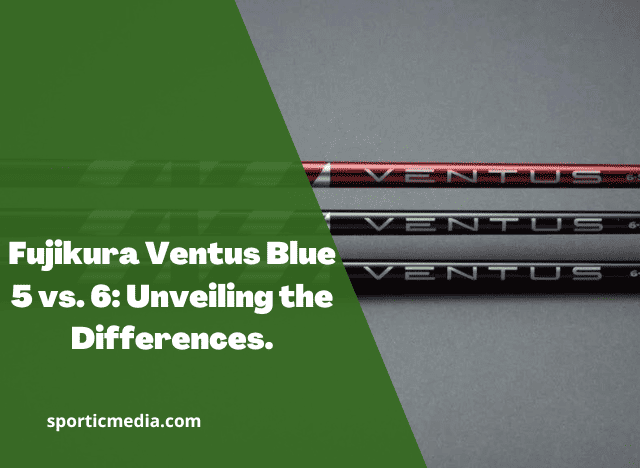
Both shafts belong to the same Ventus Blue family, meaning they share a similar design goal: providing a mid-launch, low-spin ball flight with improved stability. The biggest difference between them is not that one creates a completely different trajectory, but rather the weight, feel, and type of golfer they suit best.
The Ventus Blue 5 is the lighter option, designed for players who benefit from a lighter shaft while still wanting stability. The Ventus Blue 6 adds more weight, which can provide a stronger sense of control for golfers with faster swings or more aggressive transitions.
Both models feature Fujikura’s VeloCore Technology, a multi-material construction designed to improve shaft stability and reduce twisting during the swing. Fujikura Ventus Official Specifications
This comparison will help you understand the real differences between Ventus Blue 5 and 6, including:
- Weight and specifications
- Launch and spin characteristics
- Feel differences
- Stability and dispersion
- Which golfers should choose each shaft
Table of Contents
Understanding The Fujikura Ventus Blue Shaft Family
Before comparing the Ventus Blue 5 and 6, it is important to understand what the Ventus Blue profile is designed to do.
The Ventus Blue is positioned as a balanced shaft option between the higher-launch Ventus Red and the lower-launch Ventus Black.
Generally:
| Model | General Profile |
|---|---|
| Ventus Red | Higher launch, higher spin |
| Ventus Blue | Mid launch, low spin |
| Ventus Black | Lower launch, lower spin |
The Ventus Blue is popular because many golfers want a shaft that provides stability without feeling overly stiff or harsh.
It is designed for players who want:
- A controlled ball flight
- Consistent impact feel
- Reduced unwanted twisting
- A smooth but stable swing sensation
What Do The Numbers 5 And 6 Mean?
The numbers in Ventus Blue 5 and Ventus Blue 6 mainly refer to the weight category.
They do not represent quality or performance level.
A heavier shaft is not automatically better. The correct choice depends on your swing characteristics.
Typical weight ranges:
| Shaft | Weight Category |
|---|---|
| Ventus Blue 5 | Approximately 50–60 grams |
| Ventus Blue 6 | Approximately 60–70 grams |
The exact weight changes depending on flex.
For example:
| Model | Approximate Weight |
|---|---|
| Ventus Blue 5 | Around 58–59g |
| Ventus Blue 6 | Around 65–66g |
Fujikura Ventus Technical Specifications
The difference of around 7 grams may seem small, but in a golf shaft, it can noticeably affect:
- Swing tempo
- Timing
- Club delivery
- Player confidence
Fujikura Ventus Blue 5 Review
The Fujikura Ventus Blue 5 is designed for golfers who want the stability of the Ventus profile in a lighter package.
It is often chosen by players who want to increase clubhead speed or avoid feeling restricted by a heavier shaft.
Ventus Blue 5 Specifications
| Feature | Ventus Blue 5 |
|---|---|
| Weight | Around 58–59g |
| Launch | Mid |
| Spin | Low |
| Feel | Smooth and responsive |
| Flex options | R2, R, S, X (depending on market availability) |
| Technology | VeloCore |
How Does Ventus Blue 5 Perform?
The main advantage of the Ventus Blue 5 is its combination of:
- Lightweight feel
- Stability
- Smooth loading
- Controlled ball flight
For golfers with moderate swing speeds, a lighter shaft can sometimes help generate more speed without sacrificing consistency.
However, lighter does not always mean longer.
Some players actually lose accuracy when moving to a lighter shaft because they struggle to control the club during transition.
The ideal fit depends on how the golfer loads the shaft.
Pros Of Ventus Blue 5
- Easier Speed Generation
The lighter weight can help golfers who struggle to create clubhead speed.
- Smooth Feel
Many golfers enjoy the responsive feel during the transition.
- Good Stability For A Lightweight Shaft
Compared with many lightweight shafts, Ventus Blue 5 maintains excellent stability through impact.
Potential Downsides Of Ventus Blue 5
- May Feel Too Light For Stronger Players
Players with aggressive transitions may prefer additional weight.
- Less Mass Through The Swing
Some golfers prefer feeling more shaft weight because it helps them control tempo.
Fujikura Ventus Blue 6 Review
The Fujikura Ventus Blue 6 is one of the most widely used versions in the Ventus lineup.
It keeps the same overall Blue profile but adds additional weight, making it a popular choice among stronger players.
Ventus Blue 6 Specifications
| Feature | Ventus Blue 6 |
|---|---|
| Weight | Around 65–66g |
| Launch | Mid |
| Spin | Low |
| Feel | Stable and controlled |
| Flex options | R, S, X, TX (depending on market availability) |
| Technology | VeloCore |
How Does Ventus Blue 6 Perform?
The extra weight of the Ventus Blue 6 can help some golfers maintain better control throughout the swing.
Players who have:
- Faster swing speeds
- Strong transitions
- Higher clubhead speed
- A tendency to lose control with lighter shafts
may prefer the Blue 6.
The heavier profile can create a more connected feeling and may help improve consistency for the right player.
Pros Of Ventus Blue 6
- More Stability Through The Swing
The added weight can help stronger players maintain control.
- Consistent Feel
Many golfers describe it as smooth but more substantial compared with lighter shafts.
- Good Option For Faster Swing Speeds
Players who overpower lighter shafts often benefit from moving into the 60g category.
Potential Downsides Of Ventus Blue 6
- May Reduce Speed For Some Players
A heavier shaft can make it harder for some golfers to maintain speed.
- Requires Proper Fitting
A player should not choose the Blue 6 simply because it is heavier.
Fujikura Ventus Blue 5 vs 6: Full Comparison
| Feature | Ventus Blue 5 | Ventus Blue 6 |
|---|---|---|
| Weight | 50–60g class | 60–70g class |
| Launch | Mid | Mid |
| Spin | Low | Low |
| Feel | Lighter, smoother | More stable, solid |
| Best for | Players wanting speed and easier loading | Players wanting control and stability |
| Swing type | Smooth to moderate tempo | Faster or aggressive tempo |
Weight Difference: Which One Feels Better?
The biggest difference between Ventus Blue 5 and 6 is weight.
The Blue 5 may feel:
- Easier to swing
- Faster during the backswing
- More effortless
The Blue 6 may feel:
- More connected
- More controlled
- More stable
Neither feeling is universally better.
A golfer with a smooth tempo may perform better with Blue 5, while a golfer with a powerful transition may prefer Blue 6.
Launch And Spin Comparison
A common misconception is that Ventus Blue 5 automatically launches higher than Ventus Blue 6.
In reality, both shafts share a similar profile:
- Mid launch
- Low spin
The difference comes more from how the golfer delivers the shaft.
A player may launch the Blue 5 higher because the lighter weight changes their delivery, while another golfer may see almost identical numbers between both shafts.
Shot Dispersion And Stability
Both shafts are designed to improve stability through Fujikura’s VeloCore technology.
However, dispersion is affected by:
- Swing mechanics
- Clubhead
- Shaft flex
- Shaft weight
- Impact location
The Ventus Blue 6 is not automatically more accurate than the Blue 5.
A golfer who cannot properly load the heavier shaft may actually hit worse shots.
The best shaft is the one that allows the player to deliver the club consistently.
Frequently Asked Questions About Ventus Blue 5 vs 6
Is Ventus Blue 5 Or Ventus Blue 6 Better For Beginners?
For most beginner golfers, the Ventus Blue 5 is likely to be easier to handle because of its lighter weight.
A lighter shaft can help some newer players:
- Increase clubhead speed
- Complete the swing more comfortably
- Improve timing
- Avoid fatigue during a round
However, beginners should not choose a shaft only because it is lighter.
Some newer golfers have naturally fast swings or aggressive transitions and may actually benefit from the added stability of a heavier shaft like the Ventus Blue 6.
The best choice depends on the player’s swing characteristics rather than experience level alone.
Is Ventus Blue 6 Too Heavy For Amateur Golfers?
No. The Ventus Blue 6 is not only for professional golfers.
Many amateur players use shafts in the 60–70 gram range successfully.
The extra weight can help some golfers:
- Improve tempo
- Feel the clubhead better
- Reduce excessive movement during the swing
- Create a more controlled transition
However, if a golfer struggles to generate speed or feels tired during the round, the lighter Ventus Blue 5 may provide better results.
Can Ventus Blue 5 Increase Swing Speed?
A lighter shaft can potentially help some golfers increase swing speed because it requires less effort to move.
However, speed gains are not guaranteed.
A golfer may actually swing faster with a heavier shaft if the added weight improves their rhythm and sequencing.
The goal is not simply finding the lightest shaft possible. The goal is finding the shaft that allows the golfer to produce the most efficient swing.
Does Ventus Blue Reduce Spin?
The Ventus Blue profile is designed as a mid-launch, low-spin shaft compared with many other shaft profiles.
However, a shaft does not independently create a specific spin rate.
Actual spin depends on:
- Clubhead design
- Loft
- Attack angle
- Swing path
- Impact location
- Shaft delivery
A golfer who changes from one shaft to another may see different results, but the improvement comes from a better overall fit between the player and equipment.
Should I Get Ventus Blue 5 Or Ventus Blue 6 For My Driver?
The decision usually comes down to feel and consistency.
Choose Ventus Blue 5 if you prefer:
- A lighter overall club feel
- Easier acceleration
- A smoother loading sensation
- More speed potential
Choose Ventus Blue 6 if you prefer:
- A heavier shaft feel
- More stability during transition
- Better control with an aggressive swing
- A more connected feeling through impact
If possible, testing both shafts on a launch monitor is the best way to compare them.
Final Thoughts On Fujikura Ventus Blue 5 vs 6
The Fujikura Ventus Blue 5 and Ventus Blue 6 are not competing shafts where one is simply better than the other.
They are designed for different player preferences.
The Ventus Blue 5 offers the benefits of the Ventus profile in a lighter package, making it attractive for golfers who want speed, smooth feel, and easier loading.
The Ventus Blue 6 provides additional weight and a more substantial feel, making it a popular choice for golfers who want stability and control.
Both shafts feature Fujikura’s VeloCore technology and have earned strong reputations among golfers at different skill levels.
The right choice depends on your:
- Swing tempo
- Transition style
- Preferred feel
- Launch conditions
- Ball flight goals
A proper fitting remains the most reliable way to decide between the two. The best-performing shaft is the one that helps you make your most consistent swings—not necessarily the one used by professionals or the one with the highest price tag.
Discover the meticulous and expert-driven process behind our product reviews at Sportic Media. Our comprehensive guide, led by industry veterans, ensures you get the most reliable and detailed insights into golf equipment. Dive into our methodical approach by visiting How We Test Products at Sportic Media: A Comprehensive Guide
.